
Discovering a future in geospatial data science
July 1, 2026

A course chosen by chance ended up revealing a little-known career path.
For Manisekaran Harish, who majors in Data Science and Analytics and minors in Geographical Information Systems (GIS), the journey into GeoAI and geospatial data science began not with a clear plan, but with a single elective. He had enrolled in GE2215: Introduction to GIS simply to balance a demanding semester with what he thought would be a lighter course.
Instead, it changed the way he views data, maps and the world around him.
“It sparked my interest in bridging data science and GIS,” he says. As he explored further, Harish discovered a niche but fast-growing field sitting at the intersection of machine learning, spatial analytics and geographic intelligence.
That discovery began to shape his path and his internships.
When data quality became the real lesson
Keen to understand what a career at this intersection looks like in practice, Harish sought opportunities that would expose him to both industry applications and academic research.
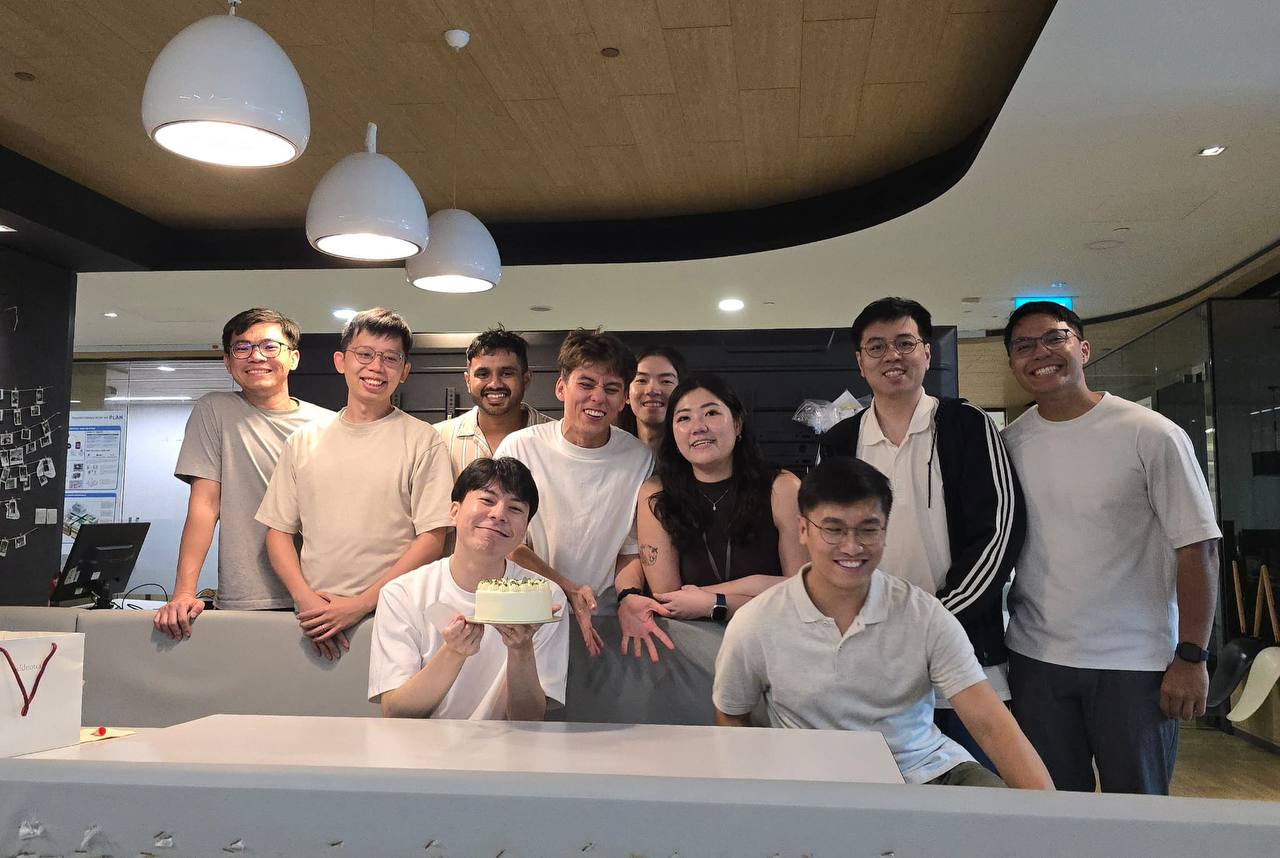
His internships at the Urban Redevelopment Authority (URA) and Cambridge Centre for Advanced Research and Education in Singapore (CARES) offered exactly that.
“URA gave me the applied, production-side experience while Cambridge focuses on research,” he says.
At URA, Harish was a Data Engineer (GIS) intern, building GIS pipelines that cleaned and manipulated its geometries and attributes, and integrating them into a common land inventory. He also developed automated quality assurance processes and validation rules for spatial data, while experimenting with geoprocessing services that could turn desktop mapping scripts into on-demand web tools.
“Data quality matters more than the model or the automation you build on top of it. You can write the most elegant pipeline, but if the input data is flawed, the output is flawed,” he says.
Beyond technical skills
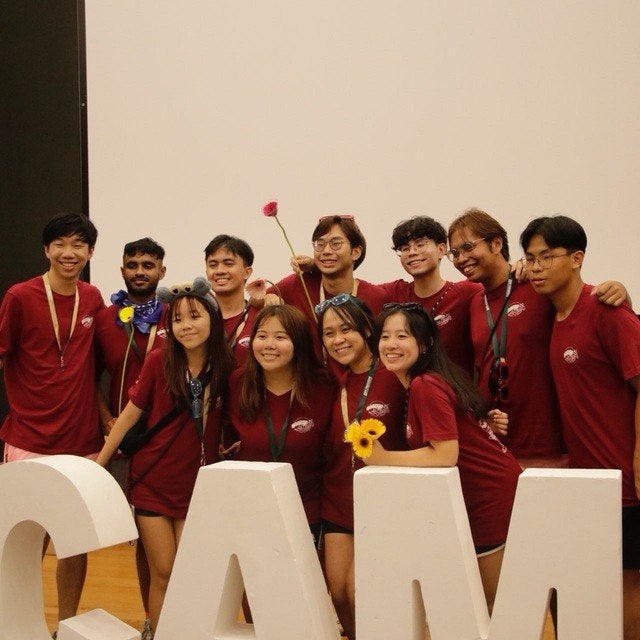
At Cambridge CARES, where he is currently a Research Intern in Urban Health and Geospatial Analytics, he assembles and harmonises multisource urban environmental datasets and develops spatial exposure metrics such as humid heat stress for Singapore.
“The pace is different, the questions are more open-ended and you need to be comfortable with ambiguity,” he says. “It’s less about delivering a fixed output and more about exploring methods, testing assumptions and refining approaches.”
Together, the two internships offer a complementary view of the geospatial field.
“The data quality instinct I built at URA is something I’ll carry into every role – to always interrogate data before building on it. My Cambridge CARES internship exposes me to the complexities of working with heterogeneous spatial data and the rigour required to design research methodologies.”
Data and geography in practice
Harish credits his academic courses for equipping him with the skills needed to navigate both internships.
One example is environmental modelling. “Neither discipline alone gives you the full picture and having both lets me approach problems like these more holistically. Taking both gives me a broader analytical toolkit,” he says.
He points to the example of interpolating temperature data across Singapore. GIS provides the spatial context – understanding distances between weather stations and how geography influences readings – while data science enables the construction of interpolation models, data processing and accuracy evaluation.
Across his GIS training, Harish developed a grounded understanding of spatial data workflows, from data collection and georeferencing to designing analytical processes for real-world applications. He also gained appreciation of how spatial information is visualised and communicated, particularly how design choices – such as simplification and visual encoding – can shape interpretation.
Beyond technical proficiency, he developed stronger geographic sensibility through research methods, which now informs how he approaches problems, consistently accounting for spatial context and scale alongside quantitative analysis.
The road toward GeoAI
His academic training, combined with hands-on experiences from his internships, brought clarity to his career goals.
“Geospatial data science is the direction I want to go.”
His internships equipped him with practical skills in spatial ETL, geoprocessing automation and exposure modelling, capabilities that extend beyond the classroom.
“What excites me is using these tools on problems tied to real places – not just numbers on a screen, but actual streets and neighbourhoods,” he says.
Eventually, he hopes to contribute to the field of GeoAI, where machine learning is applied to spatial and geographic challenges. “Its relevance is only increasing as more industries recognise the value of spatial intelligence in decision-making.”