

How insects tell the story of death
April 28, 2026
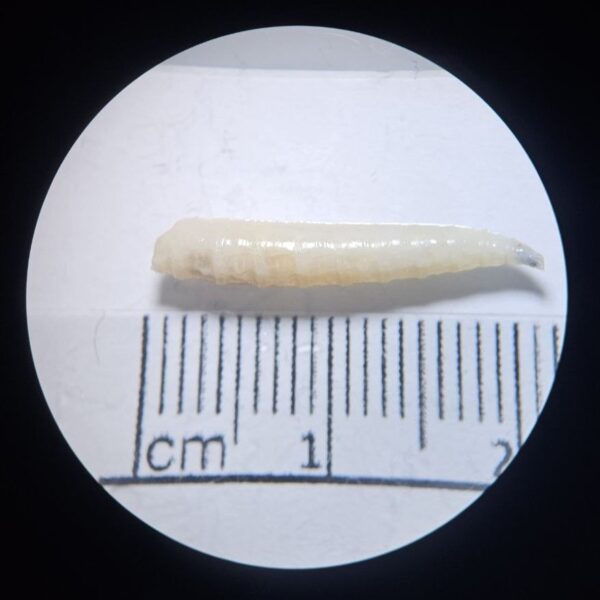
Insects - often overlooked - can play a crucial role in crime scene investigations. When a body is left undisturbed, they arrive within moments. Flies lay eggs, larvae develop and a precise biological sequence begins – one that reveals insights in ways human observation alone cannot.
It was within this unsettling intersection of life and death that a group of students immersed themselves during a recent five-day Forensic Entomology course - a learning environment where science unfolds in real time, on soil, under the sun and in our laboratories where theory meets practice.
 |
 |
Silent witnesses
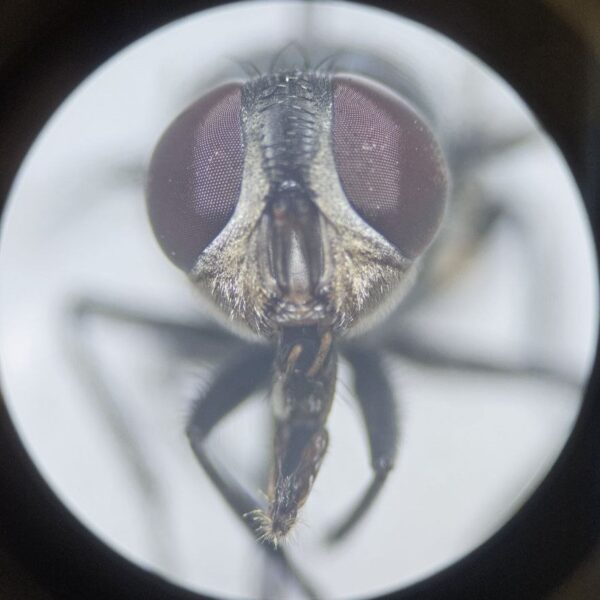
In forensic entomology, the study of insects in medicolegal investigations, insect activity serves as one of the most reliable indicators for estimating the post-mortem interval. Decay becomes data and nature transforms into evidence. Flies are often the earliest “witnesses” at a death scene and their life cycle offers critical clues that help investigators reconstruct events surrounding death.
College of Design and Engineering student Ng Yi Hsuan, who minors in Forensic Science, says, “It is fascinating that different insects, often specific to particular geographic locations, can provide meaningful insights into what happens at a crime scene.”
 |
 |
In the field
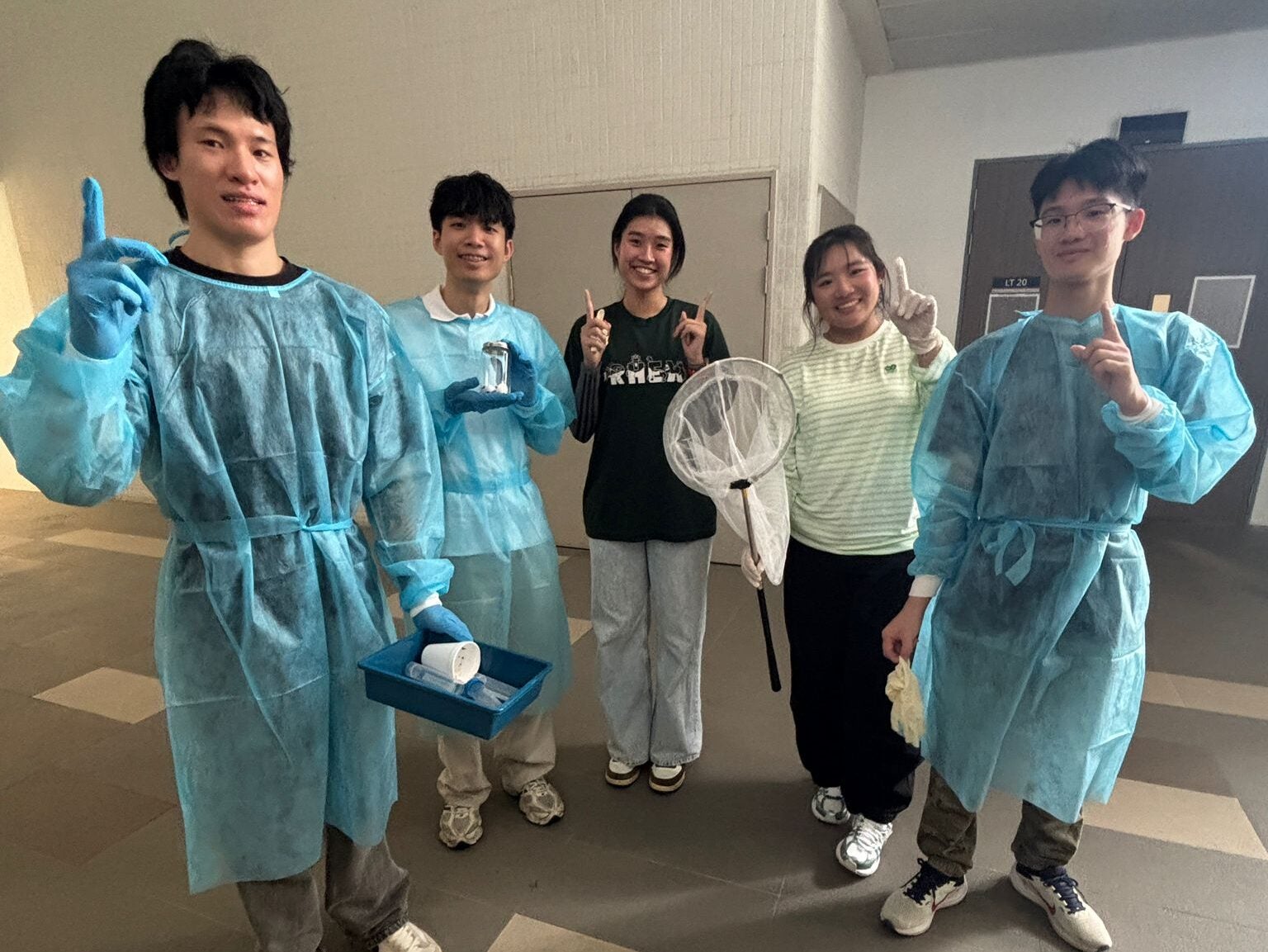
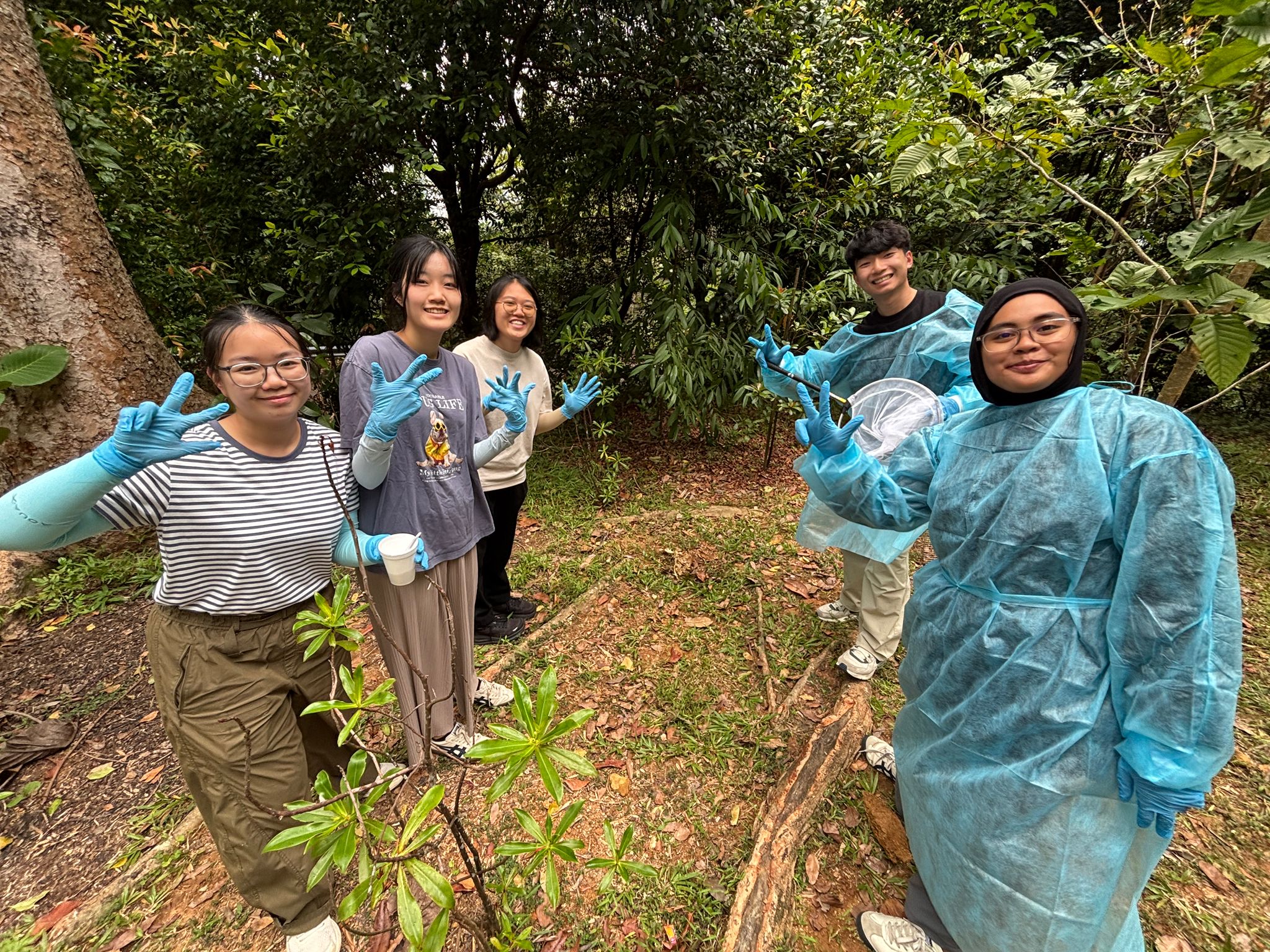
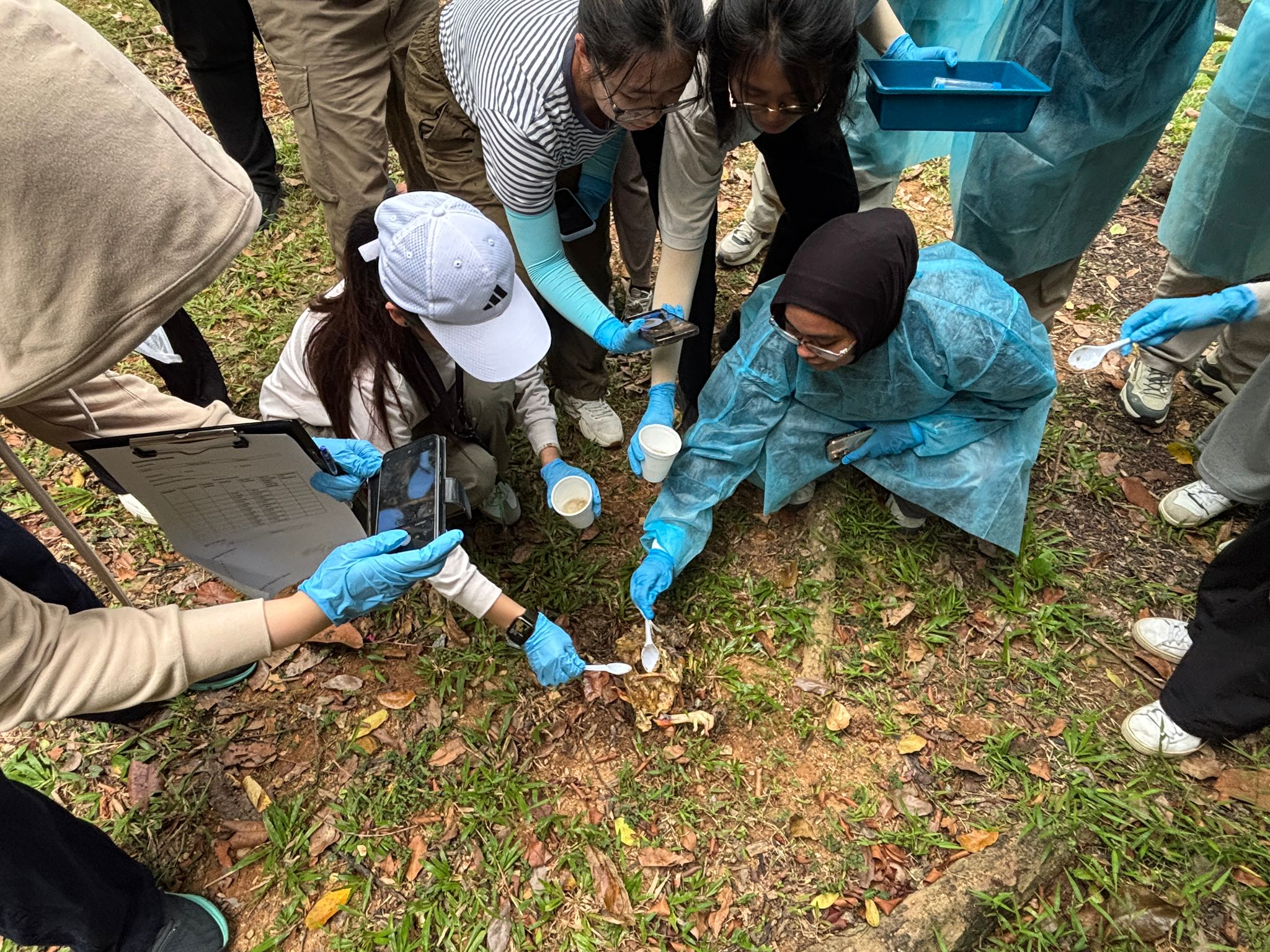
The fieldwork demands close, often uncomfortable proximity to biological decay. Students scoop up maggots from carcasses, trap flies hovering over decomposing tissue and document insect activity with meticulous care.
For Yi Hsuan, the experience was an eye-opener. “I used to be very afraid of insects and anything that felt grimy or dirty. This course forced me to confront that discomfort.”
While the discomfort never fully disappeared, it gradually gave way to a stronger sense of scientific purpose.
Life Sciences’ Nur Syahfiqah Binte Rino, says, “It is a tough course and I wanted to do it well. The specialised knowledge makes it meaningful. For instance, the dichotomy key is really useful as it’s relevant to other areas such as bacteria morphology identification.”
 |
 |
Learning through discomfort
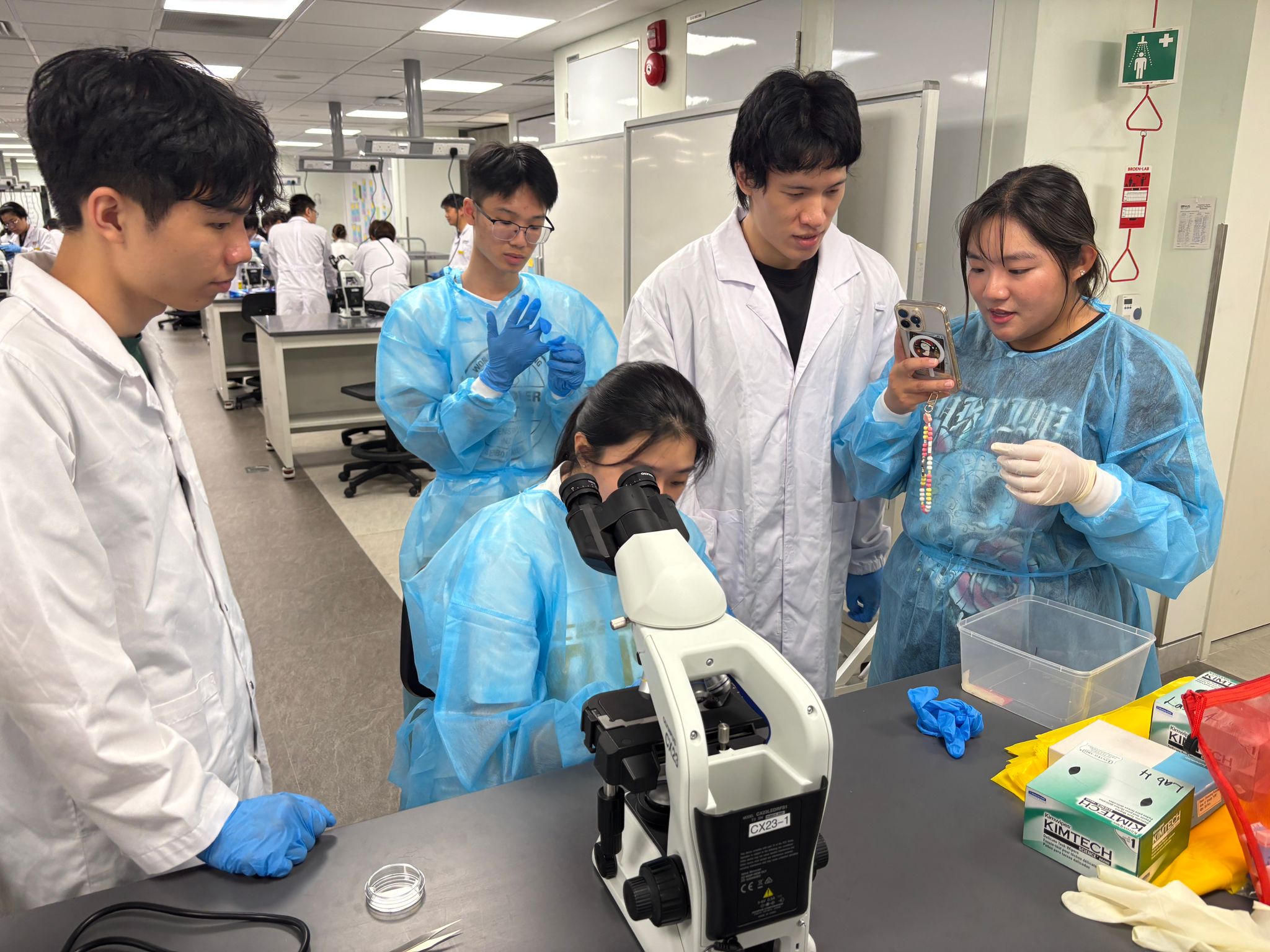
The laboratory sessions brought their own set of challenges. The sight and smell of decomposition were overwhelming, yet the students adapted quickly - gloves pulled on, instruments picked up and roles defined. Under microscopes, they identified forensically important fly families, labelled specimens and produced scientific drawings using stippling techniques.
Yi Hsuan, assigned as team leader, recalls the added challenge of navigating different working styles. “It was difficult at first,” she says. “But once I understood each person’s strengths, I could allocate tasks more effectively. That’s when the group became more cohesive and efficient.”
The pace of the course left little room to slow down. Between specimen collection, identification, documentation and presentations, time was always limited.
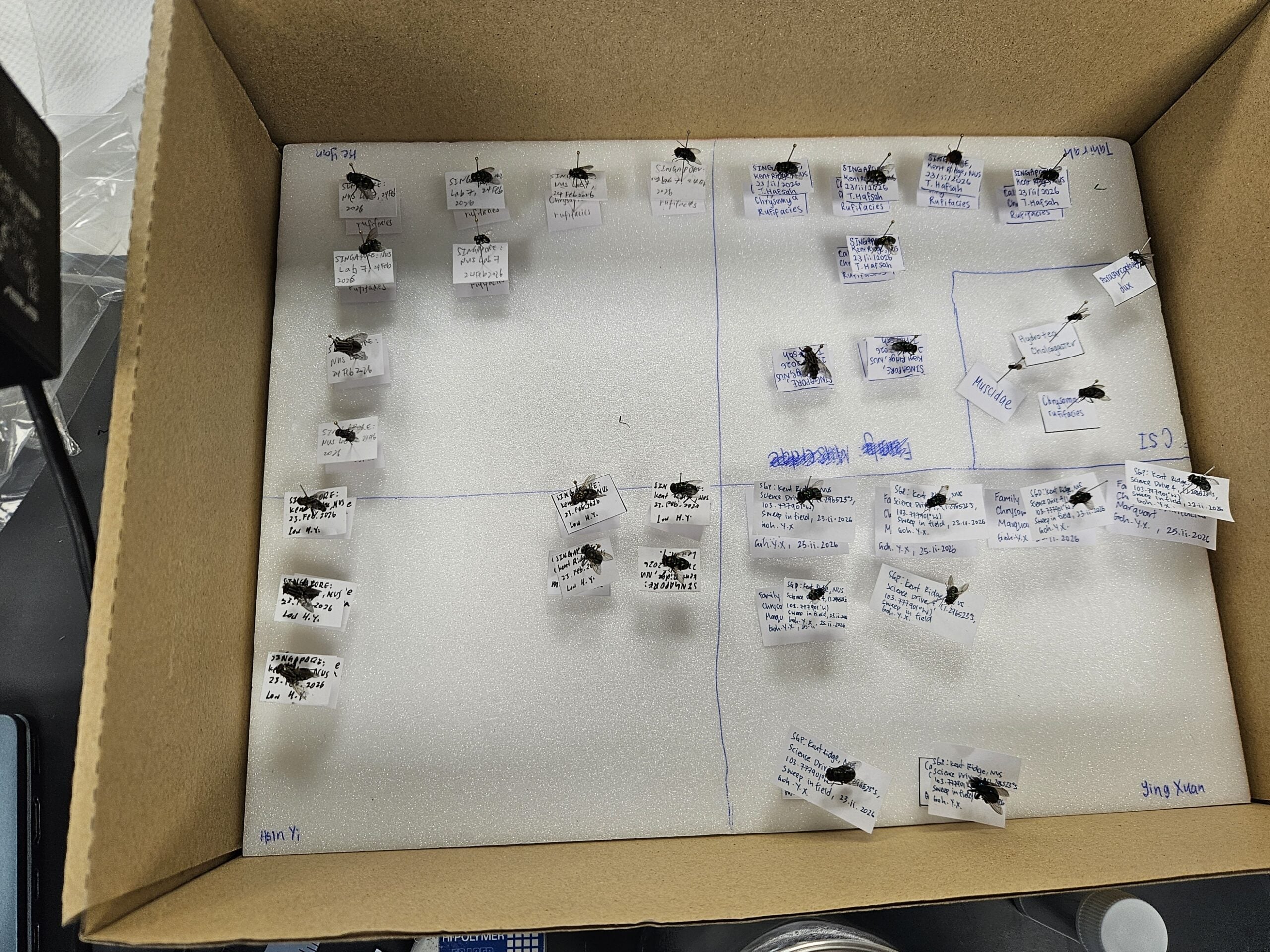
For Nur Syahfiqah, who prefers a more structured learning environment, the intensity was particularly demanding. “It was really fast-paced,” she says. “It wasn’t easy to know what to look out for when identifying flies and larvae. I managed to overcome this through daily practice and by asking questions.”
Students from diverse academic backgrounds also had to rethin their ways of working. Yi Hsuan says, “I’m used to structured systems and controlled variables. But here, we interpret biological evidence within complex real-world environments.”
Learning to work through variables which impact insect development- temperature, humidity, insect succession and environmental disturbances - to arrive at the most plausible explanation deepened her appreciation of interdisciplinary science.
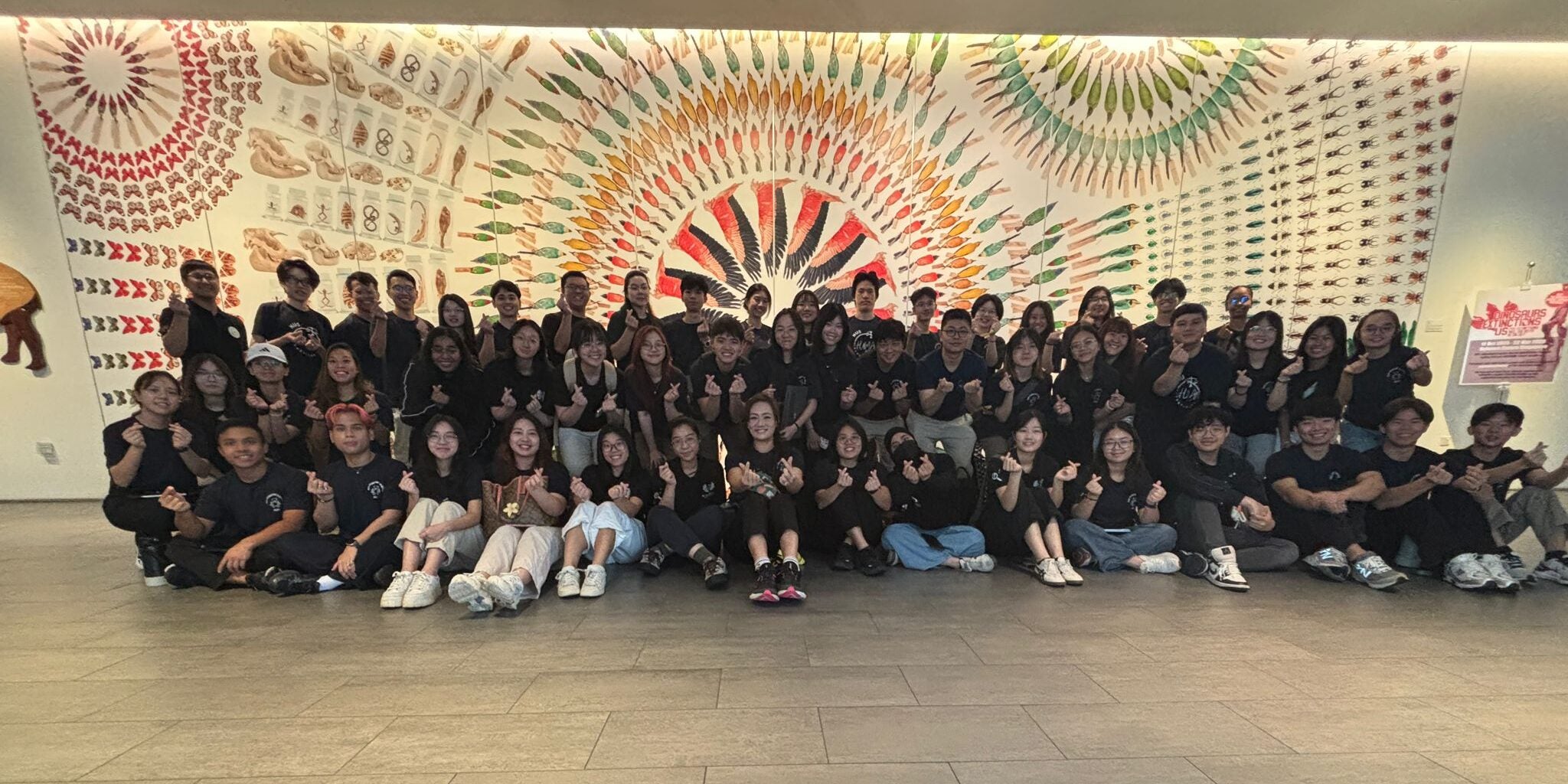
Amid the intensity, there were light-hearted moments. A visit to the Lee Kong Chian Natural History Museum offered a welcome interlude, allowing the students to explore exhibits including a sperm whale skeleton.
Lessons that endure
In the aftermath of the course, what lingered was more than carefully labelled specimens or pages of data. The students came away with a sharper understanding that science is not confined to controlled environments - it is everywhere, unfolding in ways that are dynamic, messy and often resistant to perfection.
More importantly, they left with lessons that extended beyond entomology: persistence in uncomfortable conditions, teamwork under pressure and the recognition that good science is rarely neat but always forward-looking despite constraints.
Yi Hsuan says, “‘Good and timely’ is more valuable than ‘perfect but late’. This was an important lesson for me, especially in a team setting where progress often depends on the entire group moving forward together.”