
Where science meets the stage: Where passions converge
January 27, 2026
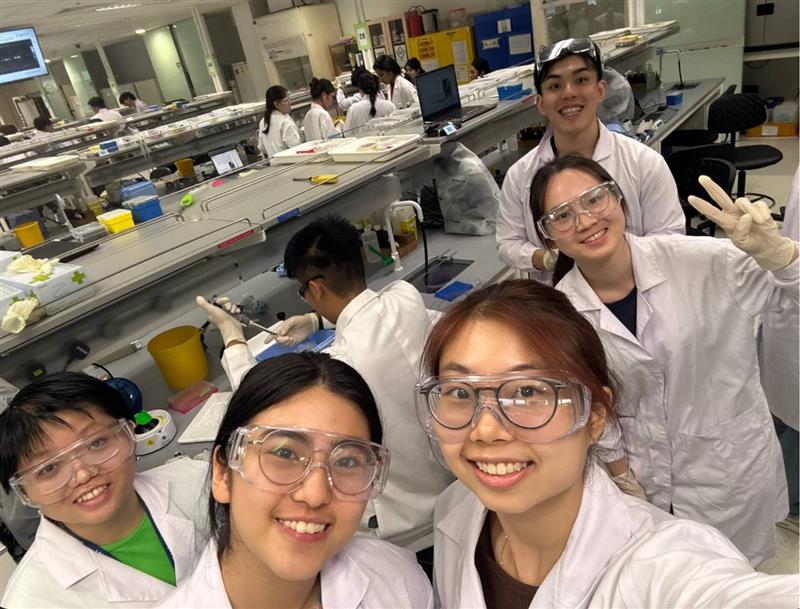
For Year 4 Life Sciences Major Lim Min Hui, university is not about narrowing her interests but giving them room to coexist. Within the College of Humanities and Sciences (CHS)’ interdisciplinary curriculum, she had the space to pursue a Minor in Theatre Studies alongside her scientific training - not as a departure from her academic trajectory, but as an extension of her long-standing passion with theatre that has quietly influenced how she learned and expressed herself.
That relationship with theatre began in kindergarten, when her mother enrolled her in speech and drama classes. What started as playful experimentation with performance quietly laid the foundations for confidence and communication - skills that stayed with her long after she left the stage.
Years later in junior college, she chose Theatre Studies and Drama as a H2 subject, opting for a path less travelled. Despite being out of practice, the experience proved formative. The subject pushed her beyond her comfort zone, honing her critical thinking and analytical abilities while challenging her to make nuanced directorial decisions in her own work. Over time, she learned not just to manage stage fright, but to embrace the stage as a space for thoughtful, composed expression.
Lessons across disciplines
Pursuing Theatre Studies at NUS became a natural extension of her interests. At first glance, science and theatre appear to occupy opposite ends of the spectrum - one governed by empirical rigour and reproducibility, the other by emotional expression and artistic interpretation. Yet, Min Hui learned to uncover unexpected parallels between these two disciplines.
“Just as scientific progress depends on continual exploration and experimentation built upon the foundational work of those before us, contemporary theatre similarly evolves by reimagining long-standing elements and practices, whileintegrating crucial themes in this modern age. Both scientific and theatrical theories are also continually shaped by new knowledge, beliefs and even political shifts,” Min Hui says.
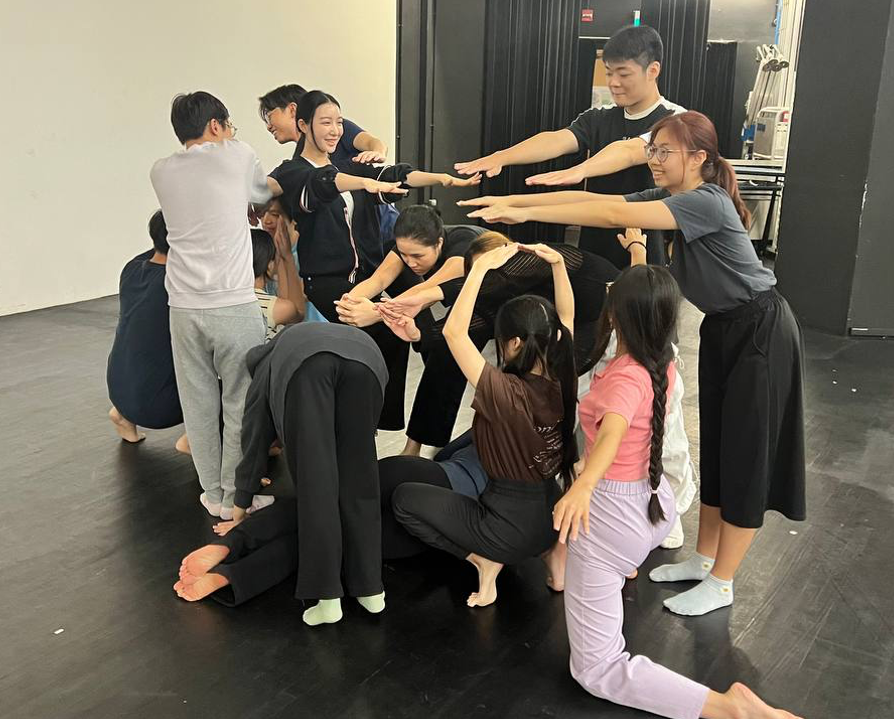
This parallel became especially apparent in the balance between the individual and the collective. In theatre, precision at the most granular level - control over breath, movement and intention - is essential, yet these individual contributions only find meaning when integrated with the rhythms and intentions of the ensemble, demanding constant awareness of others on stage.
“The same holds true in science,” Min Hui says, “Each scientist has a responsibility to account for the smallest details in their research, such as safeguarding reagent stability and minimising variability, to advance the field of knowledge accurately and effectively as a collective effort.”
Having dipped her toes into both the arts and science, Min Hui believes she has gained “unique insights and perspectives on society and the world and learned to embrace collaboration with people of different beliefs and backgrounds.” These are skills she expects to carry forward.
Click on the thumbnails below to view the full images