Humanities Online Talks

1st March, 1 pm - 5 pm

Join us online to explore the curriculum and learning opportunities at the NUS College of Humanities and Sciences (CHS), Faculty of Arts and Social Sciences. The session will include presentations on our academic programmes and the student journey, where you will hear firsthand accounts of their diverse learning experiences, both on campus and beyond.

11 am - 12 pm

Cross-Disciplinary Programme Geospatial Intelligence

Intelligence from Space and Place, for Real-World Solutions
Ever wondered how your phone predicts traffic, how we track the spread of a disease, or how businesses decide where to open new stores? The answer lies in Geospatial Intelligence—a thriving field at the intersection of geography and computing. By combining spatial thinking, data analytics, and AI, geospatial intelligence transforms location-based data into evidence-based insights that support decision-making across domains for understanding complex real-world problems. This session introduces the Bachelor of Science in Geospatial Intelligence, a new Cross-Disciplinary Programme jointly offered by NUS Geography and Computing. We will explore the programme structure, highlight career pathways across industry and the public sector, and show how this programme prepares students to turn real-world data into real-world impact.

11 am - 12 pm

Cross-Disciplinary Programme Philosophy, Politics, and Economics

Discover PPE: Philosophy, Politics & Economics at NUS
Curious about how markets work, what makes policies effective, or why justice matters? The PPE major at NUS offers you a unique opportunity to explore the biggest questions facing society through three interconnected disciplines. In this session, you'll learn what it means to study Philosophy, Politics, and Economics together—how these fields complement each other and why this interdisciplinary approach prepares you to tackle complex real-world challenges. Whether you're interested in public policy, finance, tech, or social impact, PPE gives you the analytical tools and critical thinking skills to make a difference. Come hear about the curriculum, career pathways, and student experience. Our current PPE students will be on hand to answer your questions and share their journeys."

1 pm - 1:50 pm

Centre for Language Studies

Multilingualism and Intercultural Competence as your 21st Century Assets

As cultures increasingly interact and integrate with one another, multilingualism and intercultural competence have become key assets that give you an edge in our competitive society and the job market. The language-educator panellists will provide insights into the importance and value of mastering – starting from your first year at NUS – one of the 10 Asian and 3 European languages taught at the CLS. The panellists will elaborate on the opportunities as well as the challenges, and the best strategies for ensuring that the requirements of a Minor in Language Studies will be met.
1 pm - 1:50 pm

English Language & Linguistics, English Literature, and Theatre & Performance Studies

Exploring the Power of Language, Literature and Performance: A Journey through Linguistics, Literature and Theatre Studies

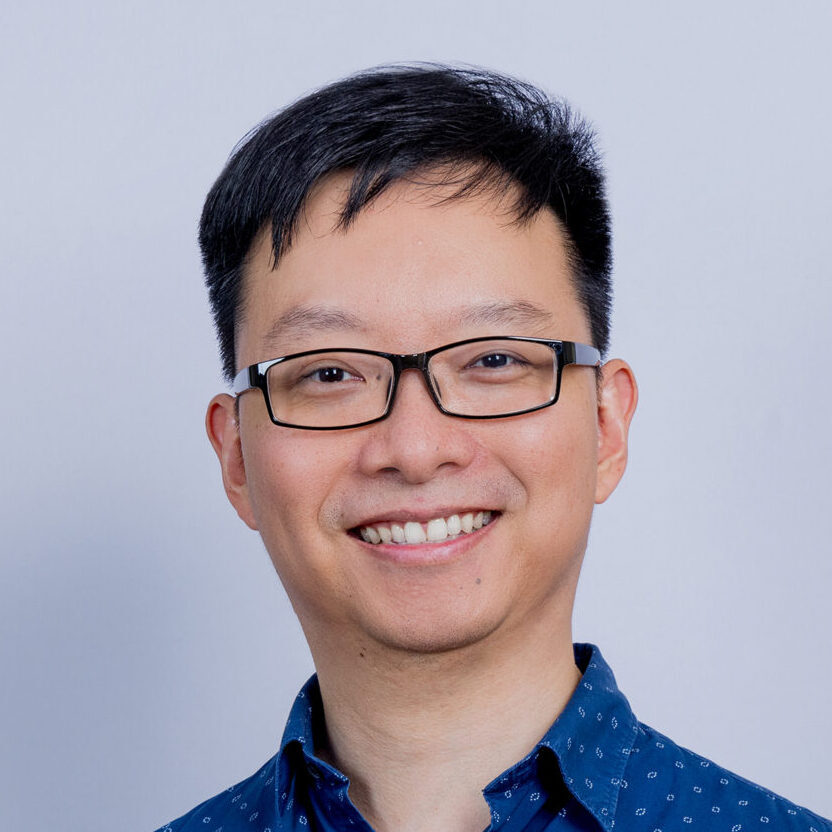
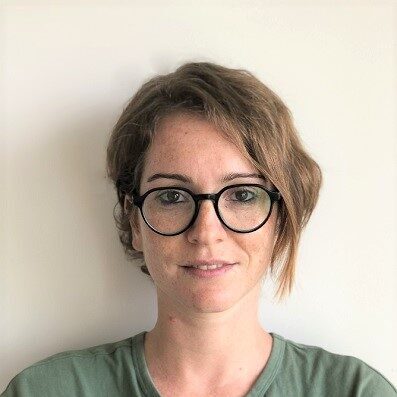
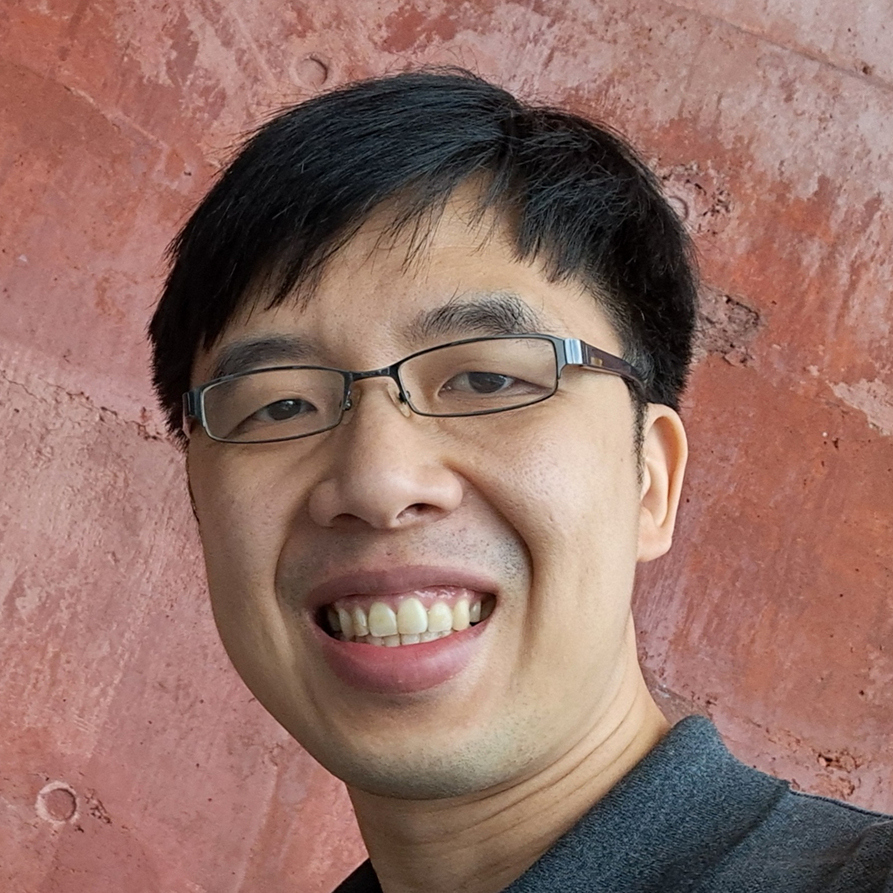
English Language & Linguistics (Dr Nick Huang): In this part of the session, we will take a closer look at the foundational theories and methodologies that define the field of linguistics. We will also learn more about how our program contributes to our understanding of how language works in Singapore, Asia, and even the rest of the world. In addition to theoretical knowledge, we also emphasise practical, hands-on experiences that prepare students for a wide range of careers, such as teaching, speech and language therapy, and AI.

English Literature (Dr Gilbert Yeoh): In the Literature section of the talk, we will look at the poetry of American modernist poet William Carlos Williams as well as a sample of critical theory by the theorist Mikhail Bakhtin. These examples give us a sense of the joy and pleasure of studying literature and an idea of what studying literature at the tertiary level involves. There will also be a brief look at the Literature curriculum.

Theatre & Performance Studies (Associate Professor Liang Peilin): At the NUS Theatre and Performance Studies programme, we study theatre and performance as a practice and as a discourse for understanding a world that has become increasingly complex and performative. The programme specialises in several areas, including Asian Shakespeare, performance ethnography, theatre and fiction, applied theatre, performer training, as well as theatre and performance's intersection with disciplines such as technology, cognitive science, and healthcare. Students acquire a broad base arts training with transferrable skills that are of value to a wide range of career paths.
1 pm - 1:50 pm

Political Science

The Importance and Relevance of Political Science today
As the world storms into disorder, there is a dire need to understand and explain what this means for all states, especially small ones like Singapore. Political Science provides a useful handle in explaining this phenomenon that will be shared with students during the talk.

2 pm - 2:50 pm

Economics

Thinking Like an Economist

Why would your teacher cheat? Which factors cause crime rates to go down? Do you really love your parents? In this lecture, we use the tools of economic analysis to answer such questions and challenge everything and everyone around us, including ourselves.

2 pm - 2:50 pm

Geography

Earth Lab to Frontiers and Beyond: Geographical Explorations

The talk focuses on geographical journeys and pathways based on different modes of teaching and learning in geography, including student experiences in overseas field courses, cultural exchanges, and team-based fieldwork covering hard and soft skills learning. The talk introduces diverse aspects of NUS Geography, including environmental, urban, geo-spatial, geopolitical, financial, and cultural.

2 pm - 2:50 pm

History

Why (NUS) History?

Why do we study History? Why major in History at NUS? And what can I do with a History degree? This talk will address some of your burning questions on one of the university's oldest departments, and illuminate how we can and must think about ourselves and the world today historically.

3 pm - 3:50 pm

Chinese Studies (Bilingual) and Chinese Languages and Cultures

Introduction to the New CL (Chinese Languages and Cultures) and CH (Chinese Studies [Bilingual]) Majors

The Department of Chinese Studies recently revamped its two majors. Join our online session to learn how our newly reimagined programmes empower the next generation of global citizens with essential insights into the past and present of China, as well as its mobile languages and cultures—regardless of your threshold Chinese language proficiency.

3 pm - 3:50 pm

Global Studies

Understanding How We Are All Connected

This talk will focus on explaining the field of Global Studies, why you should consider Global Studies, the various offerings of the Global Studies programme as well as your career prospects with a Global Studies degree.

3 pm - 3:50 pm

Sociology and Anthropology

Faculty on Faculty: Inside Sociology and Anthropology

What happens when a sociologist and an anthropologist interview each other? In this special Open House dialogue, two faculty members sit down for an unscripted conversation about what we teach and research, and why studying social relations, cultural trends and human behaviour is more important now than ever. Instead of a traditional presentation, we’ll bring you into a candid exchange, where we ask each other questions that students often wonder about but rarely get to hear their profs discuss. What do Sociologists and Anthropologists fight about? Do we ask different questions, or the same questions in different ways? Does our research outside the classroom shape the way we teach inside it? And what kinds of careers become possible when you get skilled at thinking critically about culture, inequality, power structures, and everyday life?

We’ll also talk about classroom experiences, fieldwork, and community engagement. We’ll discuss how students learn to analyse complex issues, ask sharper questions, and apply social insight to real world problems. Along the way, we’ll challenge each other, compare perspectives, and reflect on where our disciplines intersect and diverge.

If you’re curious about how social scientists think, how knowledge about social and cultural reality is produced, and what it’s like to study Sociology or Anthropology, this conversation is for you. Come listen in as faculty turn the spotlight on each other and explore what it really means to study society today!

4 pm - 4:50 pm

Communications and New Media

Your Future Begins Here: What can you do with a B.Soc.Sci from Communications and New Media?

An introduction to your next four years in CNM, this talk will cover all areas of the life of a CNM student — our majors, minors, student life experience opportunities, and aims to cover the most important question students have: What exactly does graduating with a degree from CNM mean? Join us as Associate Professor Carol Soon and two CNM students answer your questions and take you through what you can expect to learn as a CNM student, and how it matters in your future.

4 pm - 4:50 pm

Japanese Studies

Japanese Studies: Diverse Interests, Grounded Knowledge

Anchor your expertise in Japan at Asia’s premier department for Japanese Studies. Here, you won’t just learn about Japan—you’ll engage with it. Study under world-class faculty who bridge rigorous theory with on-the-ground reality, and tap into extensive professional and business networks that span the region. Gain practical experience through funded internships and personalized mentorship, translating diverse academic interests into grounded, actionable knowledge. Whether your path leads to business, policy, or beyond, NUS Japanese Studies equips you to build a versatile career. Join this session to discover how you can build your bridge to Japan—and to the world.

4 pm - 4:50 pm

Psychology

Demystifying Psychology: The Truth About the Science of the Mind and Behaviour

Don’t mistake psychology for mind-reading. In this session, let us demystify what psychology really is—and what it is not. Tackle common myths about psychologists, learn why psychology is an empirically grounded discipline, and candidly weigh whether psychology is for you. Explore human behaviour and understand what studying psychology at NUS truly involves.